Seared Tuna with Avocado Salsa
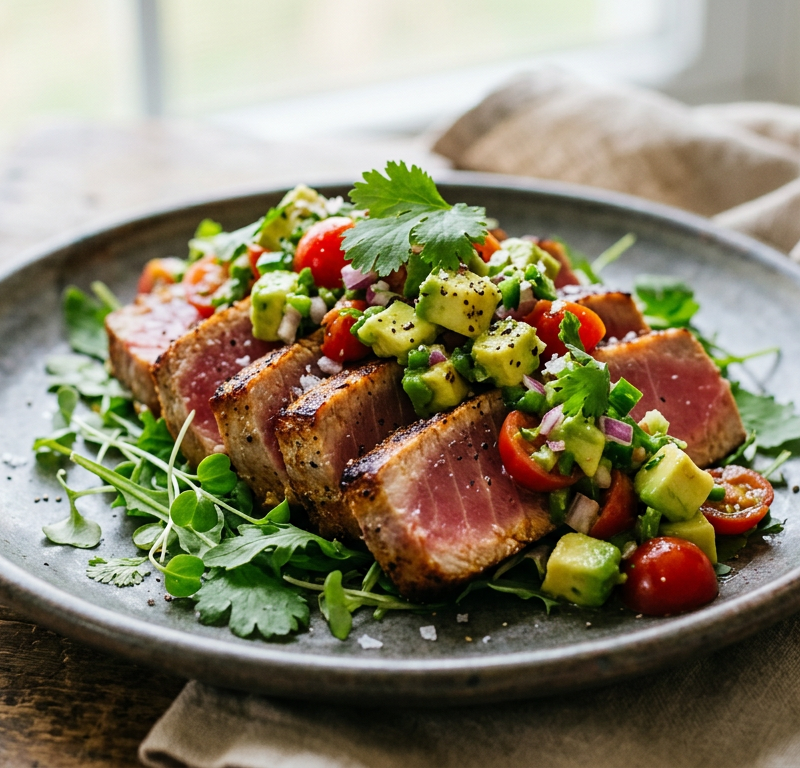
Seared Tuna with Avocado Salsa

Julia

This restaurant-quality seared tuna dish brings the elegance of fine dining to your home kitchen with surprisingly simple techniques. Ahi tuna steaks are quickly seared to perfection—creating a beautifully caramelized crust while maintaining a tender, ruby-red center that melts in your mouth. The contrast between the warm, sesame-crusted exterior and cool, rare interior is nothing short of spectacular.

The creamy avocado salsa provides the perfect counterpoint to the meaty tuna, combining buttery avocado with bright lime juice, fresh cilantro, and a hint of jalapeño for subtle heat. This vibrant topping not only adds incredible flavor but also delivers healthy fats and a gorgeous presentation that will impress any dinner guest.

Inspired by Pacific Rim cuisine, this dish celebrates the natural flavors of premium-grade tuna without overwhelming it. The key is using sushi-grade ahi tuna and cooking it quickly over high heat—just 1-2 minutes per side ensures the fish stays tender and flavorful. Naturally gluten-free and packed with omega-3 fatty acids and lean protein, this dinner proves that healthy eating can be absolutely luxurious.

Ready in under 20 minutes from start to finish, this recipe is perfect for busy weeknights when you want something special, or for entertaining when you need to impress without spending hours in the kitchen. Serve it alongside steamed jasmine rice or a crisp Asian slaw for a complete meal that rivals any upscale seafood restaurant.

Nutrition

18 minutes
None servings
385 calories
Fat 18.00g
Carbs 12.00g
Protein 44.00g

Ingredients

4 6-ozahi tuna steaks, patted dry
3 tbspsesame seeds, white and black mixed
2 mediumavocados, diced
1 cupcherry tomatoes, quartered
1/4 cupred onion, finely diced
1 smalljalapeño, seeded and minced
1/4 cupfresh cilantro, chopped
2 mediumlime, juiced
2 tbspolive oil
1 tspsesame oil
1 tspsalt, divided
1/2 tspblack pepper, freshly ground
2 tbspsoy sauce, gluten-free (optional)

Equipment

Cutting board
paper towels
medium mixing bowl
measuring cups and spoons
sharp knife
instant-read thermometer
shallow plate
cast-iron or heavy-bottomed skillet

16:8 Diet

This nutrient-dense recipe is perfect for the 8-hour eating window, providing high-quality protein, healthy fats, and essential nutrients that promote sustained energy and satiety. The balanced macronutrients help meet daily nutritional needs within the compressed eating timeframe.

80/20 Diet

This recipe easily meets the 80/20 principle with 100% nutrient-dense whole foods including omega-3-rich fish, antioxidant-packed vegetables, and healthy fats. Every ingredient is anti-inflammatory and minimally processed, making this a perfect '80' meal.

Ancestral Diet

This recipe follows Ancestral principles with wild-caught fish, fresh vegetables, nuts (sesame seeds), and healthy oils while excluding all grains, legumes, dairy, and processed ingredients. The whole-food approach emphasizes nutrients that would have been available to our ancestors.

Anti-Inflammatory Diet

This recipe is excellent for anti-inflammatory eating, featuring omega-3-rich tuna, antioxidant-packed vegetables, and anti-inflammatory ingredients like olive oil, cilantro, and lime. The complete absence of refined carbohydrates, processed foods, and inflammatory oils makes this ideal for reducing inflammation.

Atkins Diet

This recipe is Atkins-compliant with very low net carbs (under 10g per serving), high-quality protein from tuna, and healthy fats from avocado, olive oil, and sesame oil. The complete absence of grains, sugar, and starchy vegetables makes it suitable for all Atkins phases, especially Induction.

Bulletproof Diet

This recipe fits Bulletproof guidelines with wild-caught fish, high-quality fats from avocado and olive oil, and low-toxin vegetables. The absence of gluten, grains, conventional dairy, and inflammatory oils while emphasizing omega-3s and nutrient density makes this Bulletproof-compliant.

Clean Eating

This recipe exemplifies clean eating with 100% whole, unprocessed ingredients including fresh fish, vegetables, herbs, and natural oils. Every ingredient is recognizable in its natural form with no artificial additives, preservatives, or refined ingredients.

Diabetic Diet

This recipe is diabetic-friendly with low glycemic index ingredients, minimal carbohydrates (8-10g per serving), and no added sugars. The high protein content from tuna and healthy fats from avocado help stabilize blood sugar levels while providing excellent nutrition.

Evolutionary Diet

This recipe aligns with Evolutionary Diet principles by featuring wild-caught fish, vegetables, seeds, and healthy oils that would have been available to hunter-gatherers. The complete absence of grains, legumes, dairy, and processed foods makes this ideal for evolutionary eating.

Flexible Dieting

This recipe fits flexible dieting principles with clear macronutrient content (approximately 400 calories: 40g protein, 18g fat, 10g carbs) from nutrient-dense whole foods. The balanced composition allows it to fit various macro targets while providing excellent nutrition.

Flexitarian Diet

This recipe fits the Flexitarian approach by featuring fish as a healthy animal protein option alongside abundant plant-based ingredients like avocado, tomatoes, cilantro, and onions. The emphasis on whole foods, omega-3 fatty acids, and vegetables makes this a nutritious, primarily plant-forward meal.

Gluten-Free Diet

This recipe is naturally gluten-free when using gluten-free soy sauce (tamari), featuring fresh fish, vegetables, and oils with no wheat, barley, rye, or gluten-containing ingredients. The simple, whole-food approach ensures safe dining for those with celiac disease or gluten sensitivity.

Heart-Healthy Diet

This recipe is exceptionally heart-healthy, featuring omega-3-rich tuna, heart-protective olive oil, fiber-rich vegetables, and avocado while being naturally low in saturated fat and sodium. The anti-inflammatory ingredients and absence of processed foods support cardiovascular health.

High-Protein Diet

This recipe delivers 35-40g of high-quality protein per serving from tuna, making it excellent for high-protein diets. The lean fish provides complete amino acids while the healthy fats and vegetables add balanced nutrition without excessive carbohydrates.

IIFYM (If It Fits Your Macros)

This recipe is perfect for macro tracking with clearly measurable portions providing approximately 35-40g protein, 15-18g healthy fats, and 8-10g carbs per serving. The nutrient-dense whole foods and balanced macronutrient profile make it easy to fit into personalized macro targets.

Intermittent Fasting

This nutrient-dense recipe is perfect for eating windows during intermittent fasting, providing high-quality protein from tuna, healthy fats from avocado and oils for sustained satiety, and minimal processed ingredients. The balanced macronutrients and omega-3 fatty acids support stable blood sugar levels and help practitioners feel satisfied throughout fasting periods.

Intuitive Eating

This recipe supports intuitive eating by offering a satisfying, nourishing meal that honors both taste preferences and gentle nutrition. The combination of textures, flavors, and nutrients provides both pleasure and satiety without restriction or guilt-based language.

Ketogenic Diet

This is an excellent keto-friendly recipe with minimal carbohydrates from the vegetables, high-quality protein from tuna, and abundant healthy fats from avocado, olive oil, and sesame oil. The net carbs remain very low (approximately 6-8g per serving) while providing 70%+ calories from healthy fats, making it perfect for maintaining ketosis.

Lectin-Free Diet

This recipe is lectin-free, avoiding all high-lectin foods while featuring approved ingredients like wild-caught fish, avocado, olive oil, and properly prepared vegetables. The absence of grains, legumes, nightshades (when tomatoes are omitted or peeled/deseeded), and conventional dairy makes this compliant.

Low-Carb Diet

With approximately 8-10g net carbs per serving, this recipe fits perfectly within low-carb guidelines by focusing on protein-rich tuna, healthy fats from avocado and oils, and low-carb vegetables like tomatoes and peppers. The absence of grains, starches, and high-carb ingredients makes this an ideal low-carb meal.

Macro Diet

This recipe provides easily trackable macros with high-quality protein from tuna (35-40g), healthy fats from avocado and oils (15-18g), and minimal carbs (8-10g) from vegetables. The whole-food ingredients and clear portions make macro counting straightforward.

Mayo Clinic Diet

This recipe aligns with Mayo Clinic Diet principles by featuring lean protein from tuna, abundant vegetables, healthy fats from avocado and olive oil, and whole, unprocessed ingredients. The nutrient-dense composition with appropriate portions supports sustainable weight loss and overall health.

Mediterranean Diet

This recipe perfectly aligns with Mediterranean Diet principles by featuring omega-3-rich fish as the primary protein, extra virgin olive oil as the main fat source, and abundant fresh vegetables in the avocado salsa. The emphasis on whole, unprocessed ingredients like fresh herbs, citrus, and vegetables while avoiding refined carbohydrates makes this an ideal Mediterranean-style meal.

MIND Diet

This recipe supports brain health through omega-3-rich fatty fish (tuna), vegetables, olive oil as the primary fat, and nuts (sesame seeds), all key components of the MIND Diet. The absence of butter, red meat, and fried foods while emphasizing anti-inflammatory ingredients makes this ideal for cognitive protection.

Mindful Eating

This recipe is ideal for mindful eating with its variety of textures (seared crust, tender fish, creamy avocado), vibrant colors, and fresh aromas that engage all senses. The whole, minimally processed ingredients encourage slow, conscious consumption and sensory appreciation.

Paleo Diet

This recipe is fully Paleo-compliant, featuring wild-caught fish, fresh vegetables, healthy oils, nuts (sesame seeds), and completely avoiding grains, legumes, dairy, and processed ingredients. The use of gluten-free soy sauce (or coconut aminos as a substitute) and emphasis on whole, unprocessed ingredients makes this an ideal ancestral-style meal.

Pegan Diet

This recipe aligns with Pegan principles by featuring wild-caught fish in a moderate portion alongside abundant vegetables (avocado, tomatoes, onions, cilantro) and healthy fats from olive oil and avocado. The complete absence of dairy, gluten, and processed ingredients makes this ideal for the Pegan approach.

Primal Blueprint

This recipe is Primal Blueprint-compliant with wild-caught fish, abundant non-starchy vegetables, and healthy fats from avocado and olive oil. The complete exclusion of grains, legumes, refined sugars, and processed foods while emphasizing nutrient density makes this perfect for the Primal lifestyle.

Primal Diet

This recipe is fully Primal-compliant with wild-caught fish, fresh vegetables, healthy oils, and seeds while completely avoiding grains, legumes, refined sugars, and processed foods. The nutrient-dense whole foods support metabolic health and reduce inflammation.

South Beach Diet

Perfect for South Beach Diet (all phases), this recipe features lean protein from tuna, healthy fats from avocado and olive oil, and non-starchy vegetables while completely avoiding refined carbohydrates and added sugars. The low-glycemic ingredients support stable blood sugar levels.

Weight Watchers

This recipe aligns with Weight Watchers principles by featuring lean protein from tuna, nutrient-dense vegetables, and healthy fats in controlled portions. The emphasis on whole, unprocessed ingredients and the absence of refined carbohydrates and added sugars makes this a satisfying, point-friendly meal option.

Whole30

This recipe is Whole30-compliant when using coconut aminos instead of soy sauce, featuring wild-caught tuna, fresh vegetables, compliant oils, and no added sugars, grains, legumes, or dairy. The simple preparation emphasizes whole, unprocessed ingredients that support the program's reset goals.

Wild Diet

This recipe exemplifies Wild Diet principles with wild-caught fish, organic vegetables, and healthy fats from avocado and olive oil—all foods that could theoretically be hunted, fished, or gathered. The complete avoidance of processed foods, refined sugars, and industrial oils makes this ideal.

Zone Diet

This recipe naturally achieves the Zone Diet's 40-30-30 macronutrient ratio with lean protein from tuna (30%), low-glycemic vegetables and limited carbs from the salsa (40%), and healthy fats from avocado and oils (30%). The balanced composition supports insulin control and reduces inflammation.

Instructions

1

Remove tuna steaks from refrigerator and let rest at room temperature for 10 minutes. Pat completely dry with paper towels.

10 min
2

In a medium bowl, combine diced avocados, quartered cherry tomatoes, diced red onion, minced jalapeño, and chopped cilantro.

3

Add lime juice, sesame oil, and 1/2 teaspoon salt to the avocado mixture. Gently toss to combine, being careful not to mash the avocado. Set aside.

4

Spread sesame seeds on a shallow plate. Season both sides of tuna steaks generously with remaining 1/2 teaspoon salt and black pepper.

1 min
5

Press both sides of each tuna steak into the sesame seeds, coating evenly.

1 min
6
3 min

Heat the remaining 2 tablespoons of olive oil in a large cast-iron or heavy-bottomed skillet over high heat until the oil is shimmering and almost smoking, about 2-3 minutes.

7
2 min

Carefully place tuna steaks in the hot skillet. Sear without moving for 1-2 minutes until a golden crust forms with sesame seeds toasted.

8
2 min

Flip tuna steaks and sear the other side for 1-2 minutes for rare (internal temperature of 115°F), or longer if you prefer more well-done.

9

Remove tuna from skillet and let rest on a cutting board for 2 minutes.

2 min
10

Slice each tuna steak against the grain into 1/2-inch thick slices.

1 min
11

Arrange sliced tuna on serving plates and generously top with avocado salsa. Drizzle with gluten-free soy sauce if desired.

Frequently Asked Questions