Pita Chips with Hummus
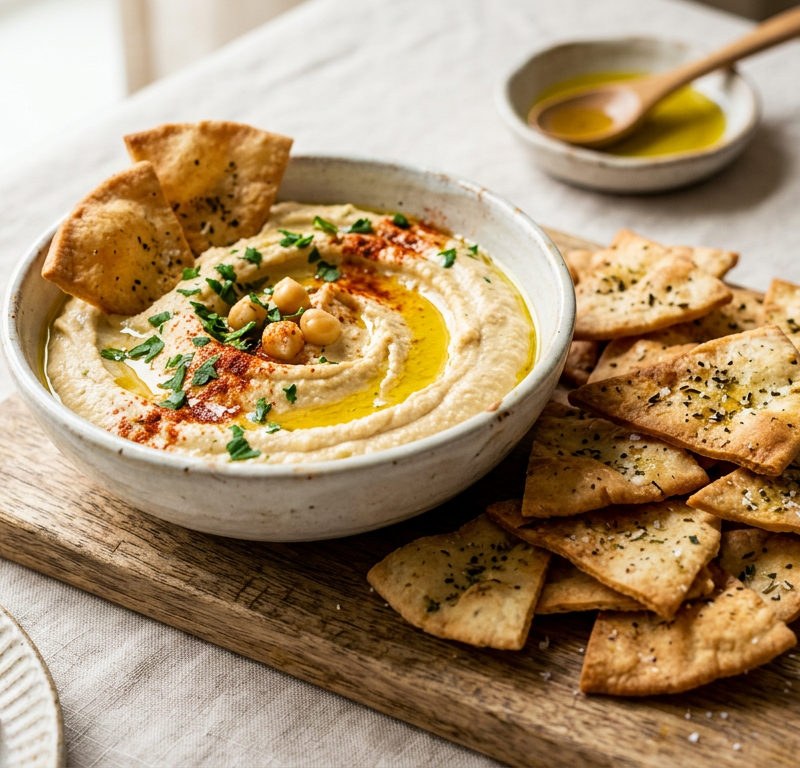
Pita Chips with Hummus

Mia

This classic Mediterranean snack brings together two beloved staples of Middle Eastern cuisine: crispy, golden-baked pita chips and velvety smooth hummus. The combination is not only delicious but also incredibly nutritious, featuring the heart-healthy fats from olive oil and tahini, protein-rich chickpeas, and whole grain pita bread. Making your own pita chips at home is surprisingly simple and allows you to control the amount of oil and salt, while achieving that perfect crunch that store-bought versions often lack.

Hummus, which translates to "chickpea" in Arabic, has been enjoyed throughout the Mediterranean and Middle East for centuries. This version stays true to tradition with its balanced blend of tahini, lemon juice, garlic, and cumin, creating a creamy dip that's both satisfying and nourishing. The homemade pita chips, brushed with olive oil and seasoned with za'atar or simple sea salt, provide the perfect vehicle for scooping up generous portions of hummus.

What makes this snack truly special is its versatility and convenience. It's ideal for meal prep, as both components can be made ahead and stored separately. The pita chips stay crispy in an airtight container for up to a week, while the hummus keeps fresh in the refrigerator for 4-5 days. Whether you're packing it for work, enjoying it as an afternoon pick-me-up, or serving it to guests, this Mediterranean-inspired snack delivers on flavor, nutrition, and satisfaction. It's a perfect example of how simple, wholesome ingredients can create something truly memorable.

Nutrition

27 minutes
None servings
285 calories
Fat 14.00g
Carbs 32.00g
Protein 9.00g

Ingredients

3 wholepita bread, preferably whole wheat
3 tbspextra virgin olive oil, for pita chips
1/2 tspsea salt, for pita chips
1 tspza'atar seasoning (optional)
15 ozchickpeas, drained and rinsed (1 can)
1/4 cuptahini, well-stirred
3 tbspfresh lemon juice, from about 1 lemon
2 clovesgarlic, minced
1/2 tspground cumin
1/2 tspsalt, for hummus
2-3 tbspcold water
2 tbspextra virgin olive oil, for hummus
1/4 tsppaprika, for garnish (optional)
1 tbspfresh parsley, chopped, for garnish (optional)

Equipment

Oven
can opener
measuring cups and spoons
pastry brush
two large baking sheets
sharp knife or kitchen scissors
food processor or high-powered blender
rubber spatula
serving bowl

16:8 Diet

This recipe is ideal for the 16:8 eating window, providing a nutrient-dense, balanced snack with protein and fiber from chickpeas, healthy fats from tahini and olive oil, and complex carbohydrates from whole wheat pita. The combination offers sustained energy and satiety to help meet nutritional needs within the compressed eating timeframe.

80/20 Diet

This recipe fits the 80/20 principle with nutrient-dense whole foods comprising the vast majority: chickpeas, whole wheat pita, tahini, olive oil, and fresh vegetables and herbs. The ingredients are minimally processed, anti-inflammatory, and rich in fiber, protein, and healthy fats, making this a solidly nutritious choice.

Anti-Inflammatory Diet

This recipe features anti-inflammatory ingredients including extra virgin olive oil, chickpeas rich in fiber and antioxidants, and spices like garlic, cumin, and lemon that help reduce inflammation. The whole food ingredients and healthy fats support overall wellness while avoiding processed foods, refined sugars, and inflammatory oils.

Clean Eating

This recipe exemplifies clean eating with whole, minimally processed ingredients: chickpeas, tahini, whole wheat pita, extra virgin olive oil, fresh lemon juice, and natural herbs and spices. Every ingredient is recognizable in its whole-food form with no artificial additives, preservatives, or refined sugars.

Flexitarian Diet

This recipe perfectly exemplifies flexitarian eating by centering entirely on plant-based ingredients—chickpeas, tahini, whole grain pita, and olive oil—while providing substantial protein and healthy fats. It's a satisfying, minimally processed option that showcases how delicious and nutritious plant-forward eating can be.

Gluten-Free Diet

This recipe can easily be made gluten-free by substituting the whole wheat pita with gluten-free pita bread or crackers, while the hummus itself is naturally gluten-free, made from chickpeas, tahini, olive oil, and spices. Always verify that all ingredients, including spice blends like za'atar, are certified gluten-free to avoid cross-contamination.

Heart-Healthy Diet

This recipe is heart-healthy, featuring cholesterol-free chickpeas, heart-protective extra virgin olive oil rich in monounsaturated fats, and fiber that helps lower cholesterol. The recipe avoids saturated fats, trans fats, and processed ingredients while providing plant-based protein and anti-inflammatory compounds from garlic and lemon.

High-Fiber Diet

This recipe is excellent for high-fiber diets, with chickpeas providing approximately 6-8 grams of fiber per serving, plus additional fiber from whole wheat pita bread. The combination of legumes and whole grains makes this a fiber-rich snack that supports digestive health and satiety.

Intermittent Fasting

This nutrient-dense snack is ideal for intermittent fasting eating windows, providing sustained energy from complex carbohydrates in whole wheat pita, protein and fiber from chickpeas, and healthy fats from tahini and olive oil. The balanced macronutrients help maintain stable blood sugar levels and provide lasting satiety throughout fasting periods.

Intuitive Eating

This recipe supports intuitive eating by offering a satisfying, balanced snack that honors both nutrition and pleasure, featuring wholesome ingredients like chickpeas, tahini, and whole grain pita without restrictive language or guilt. It provides a variety of textures and flavors that encourage mindful enjoyment while naturally offering protein, fiber, and healthy fats.

Mediterranean Diet

This recipe is a quintessential Mediterranean dish, featuring extra virgin olive oil as the primary fat, protein-rich chickpeas (legumes), whole wheat pita bread, and traditional herbs and spices like garlic, lemon, and cumin. It perfectly embodies Mediterranean Diet principles by emphasizing plant-based proteins, whole grains, and healthy fats while avoiding processed ingredients and red meat.

MIND Diet

This recipe aligns with MIND Diet principles by featuring beans (chickpeas) as a primary ingredient, whole grains from the pita bread, and olive oil as the main fat source—all brain-healthy foods emphasized in this diet. The recipe avoids butter, cheese, and fried foods while providing nutrients that support cognitive health.

Mindful Eating

This recipe is perfect for mindful eating with its variety of textures (crispy pita chips, creamy hummus), vibrant colors (golden chips, garnished with paprika and parsley), and aromatic spices that engage multiple senses. The whole, minimally processed ingredients encourage slow, conscious consumption and appreciation of natural flavors and textures.

Plant-Based Diet

This recipe is completely plant-based, featuring chickpeas as the protein source, tahini from sesame seeds, and whole grain pita bread, with no animal products whatsoever. It provides excellent plant-based protein, healthy fats, and fiber while showcasing how satisfying and flavorful whole plant foods can be.

Vegan Diet

This recipe is entirely vegan, containing no animal products or by-products—just chickpeas, tahini, whole wheat pita, olive oil, and plant-based seasonings. It offers a protein-rich, satisfying snack that demonstrates how traditional plant-based Mediterranean cuisine naturally aligns with vegan principles.

Vegetarian Diet

This vegetarian-friendly recipe provides plant-based protein from chickpeas and tahini, making it a nutritious meat-free option that's both satisfying and nutrient-dense. The combination of legumes, whole grains, and healthy fats creates a complete and balanced vegetarian meal or snack.

Instructions

1

Preheat your oven to 375°F and position the rack in the middle of the oven.

2 min
2

Cut each pita bread into 8 triangular wedges using a sharp knife or kitchen scissors. Separate each wedge into two pieces by pulling apart the two layers of pita.

3 min
3

Arrange the pita triangles in a single layer on two large baking sheets, with the rough side facing up.

1 min
4

Brush the pita triangles lightly with 3 tablespoons of olive oil, then sprinkle evenly with sea salt and za'atar if using.

2 min
5

Bake the pita chips for 10-12 minutes, rotating the baking sheets halfway through, until the chips are golden brown and crispy.

12 min
6

Remove the pita chips from the oven and let them cool completely on the baking sheets. They will continue to crisp up as they cool.

10 min
7

While the chips are baking, add the drained chickpeas, tahini, lemon juice, minced garlic, cumin, and salt to a food processor or high-powered blender.

1 min
8

Process the mixture for 1-2 minutes until smooth and creamy, scraping down the sides as needed.

2 min
9

With the food processor running, slowly drizzle in 2 tablespoons of olive oil and then add cold water, one tablespoon at a time, until the hummus reaches your desired consistency.

1 min
10

Taste the hummus and adjust seasoning with additional salt or lemon juice if needed.

11

Transfer the hummus to a serving bowl and use the back of a spoon to create a shallow well in the center.

12

Drizzle a little extra olive oil into the well and sprinkle with paprika and fresh parsley if desired. Serve with the cooled pita chips.

Frequently Asked Questions